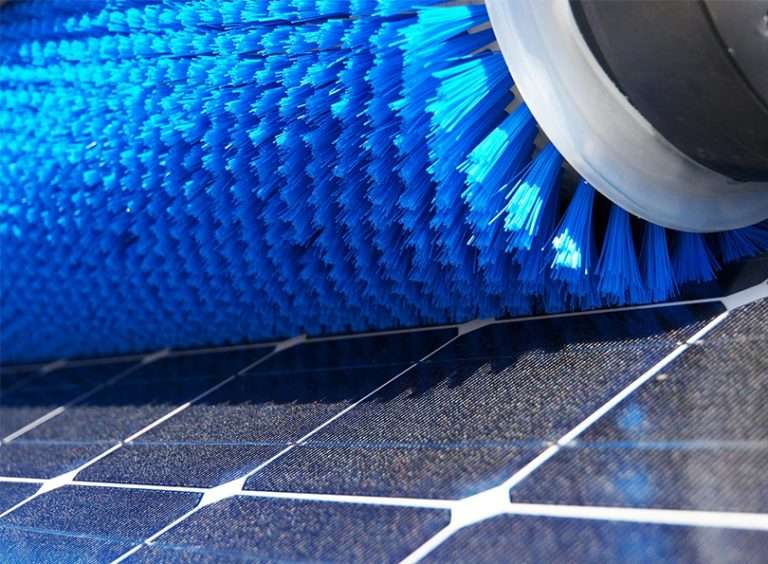
Soiling is a measurable PV performance issue, but careless cleaning can create thermal stress, scratches or needless cost. Timing should follow evidence, not panic. The aim is to give Cyprus property owners a defensible way to choose a method, recognise a stopping point and discuss the job clearly with a professional.
Editorial position
Roof access, electrical equipment and hot glass create serious risks. Owners should not climb or spray energised equipment without a competent method and manufacturer-approved procedure.
Recommended next step: Compare clean-weather output, check current dust conditions, inspect from a safe position and schedule compatible cleaning during cooler hours only when the expected recovery justifies the intervention.
Why dust deserves attention but not panic
IEA PVPS identifies soiling as a significant influence on energy yield after irradiance, yet global averages do not predict the loss on one Cyprus roof. This section focuses on the observable mechanism and the decision it should change, rather than promising one universal trick for every property.
A visibly dusty module can still generate, while a small concentrated bird dropping may create a disproportionate local obstruction; appearance and electrical effect are related but not identical. For this reason, iea pvps identifies soiling as a significant influence on energy yield after irradiance, yet global averages do not predict the loss on one cyprus roof should be treated as part of the decision, not as background detail. In residential and small-commercial photovoltaic arrays exposed to Cyprus dust, pollen, salt and limited rainfall, the useful question is whether the step removes contamination while preserving the surface and keeping access controlled. A fast result has little value if it leaves residue in an edge, transfers grit to the next pane or creates a task that cannot be repeated safely.
The timing error after a dust plume
Cleaning while the atmosphere is still depositing particles can consume water and labour for a recovery that disappears within hours. This section focuses on the observable mechanism and the decision it should change, rather than promising one universal trick for every property.
Waiting blindly for rain is not a complete strategy either, because light rain can bind dust into spots and may not rinse lower frame edges. This is also where marketing language needs translating into a measurable outcome. In the context of residential and small-commercial photovoltaic arrays exposed to Cyprus dust, pollen, salt and limited rainfall, define success before work begins: soil removed, finish unchanged, surrounding materials dry or protected, and no unsafe reach introduced. If those conditions are not met, repeating the same action more aggressively is not optimisation; it is evidence that the diagnosis or method needs to change.
Use production data carefully
Compare similar clear days, normalise expectations for season and temperature, and look for a persistent change across the array rather than one cloudy afternoon. This section focuses on the observable mechanism and the decision it should change, rather than promising one universal trick for every property.
Monitoring alarms, shading from new objects and inverter faults belong in the diagnosis because cleaning cannot repair an electrical or vegetation problem. Homeowners and facility managers should connect this point to the whole maintenance chain. For residential and small-commercial photovoltaic arrays exposed to Cyprus dust, pollen, salt and limited rainfall, preparation, access, cleaning, rinse control, drying and inspection are one process. Skipping the unglamorous stages usually explains why a result fails early. Compare clean-weather output, check current dust conditions, inspect from a safe position and schedule compatible cleaning during cooler hours only when the expected recovery justifies the intervention. That approach may look slower than a social-media shortcut, yet it produces information that can guide the next visit instead of forcing another guess.
Temperature and water quality matter
Cooler early hours reduce rapid evaporation and make it easier to control spotting, while sudden cold water on very hot modules may be inconsistent with manufacturer guidance. This section focuses on the observable mechanism and the decision it should change, rather than promising one universal trick for every property.
Mineral-rich rinse water can replace dust with scale, so water quality and a spot-free finishing method are part of the performance conversation. The practical consequence is easy to miss: conditions on one pane do not automatically represent the full property. With residential and small-commercial photovoltaic arrays exposed to Cyprus dust, pollen, salt and limited rainfall, orientation, exposure and previous maintenance can change the result within the same building. Record what was found, use a clean tool for the next stage and inspect after drying. That pause separates a genuinely improved surface from one that only looks clear while it is still wet.
Tools that protect the module
Soft, clean equipment and low-abrasion technique reduce the chance that trapped grit will scratch glass or damage coatings. This section focuses on the observable mechanism and the decision it should change, rather than promising one universal trick for every property.
Pressure, detergents and walking loads must follow the module supplier’s instructions; a faster tool is not an improvement if it threatens seals, wiring or warranty conditions. A sensible field check is to compare a small representative area with an untouched control in the same light. That matters for residential and small-commercial photovoltaic arrays exposed to Cyprus dust, pollen, salt and limited rainfall, because strong Cyprus sun can hide moisture during work and reveal haze later. Use the comparison to adjust liquid, dwell time, tool condition or cleaning sequence. Do not scale a method across the property simply because the first thirty seconds produced a dramatic visual change.
Building an economic trigger
Estimate the value of plausible lost production, compare it with safe cleaning cost and include the likelihood of another dust event before booking repeated visits. This section focuses on the observable mechanism and the decision it should change, rather than promising one universal trick for every property.
For a small home system, a visual inspection plus trend monitoring may be sufficient; larger arrays benefit from formal soiling measurement and documented maintenance decisions. For this reason, estimate the value of plausible lost production, compare it with safe cleaning cost and include the likelihood of another dust event before booking repeated visits should be treated as part of the decision, not as background detail. In residential and small-commercial photovoltaic arrays exposed to Cyprus dust, pollen, salt and limited rainfall, the useful question is whether the step removes contamination while preserving the surface and keeping access controlled. A fast result has little value if it leaves residue in an edge, transfers grit to the next pane or creates a task that cannot be repeated safely.
A Cyprus-ready maintenance record
Record the dust alert, rainfall, before-and-after output, photographs, cleaning method and any abnormal module condition so future decisions improve. This section focuses on the observable mechanism and the decision it should change, rather than promising one universal trick for every property.
The goal is not the maximum possible cleaning frequency but a defensible interval that balances energy recovery, water, access risk and equipment life. This is also where marketing language needs translating into a measurable outcome. In the context of residential and small-commercial photovoltaic arrays exposed to Cyprus dust, pollen, salt and limited rainfall, define success before work begins: soil removed, finish unchanged, surrounding materials dry or protected, and no unsafe reach introduced. If those conditions are not met, repeating the same action more aggressively is not optimisation; it is evidence that the diagnosis or method needs to change.
A practical decision checklist for this job
Begin by writing down the outcome you are trying to achieve and the condition that would make you stop. For residential and small-commercial photovoltaic arrays exposed to Cyprus dust, pollen, salt and limited rainfall, a useful record includes the surface type, exposure, recent weather, existing marks, access route and the result after complete drying. Photograph a representative area before work, because memory tends to overstate improvement once the surface is wet. Decide who controls the area below, where runoff can travel and which nearby materials need protection. These observations turn an improvised cleaning attempt into a repeatable maintenance decision.
Next, apply the least aggressive compatible step and keep an untouched comparison area. Compare clean-weather output, check current dust conditions, inspect from a safe position and schedule compatible cleaning during cooler hours only when the expected recovery justifies the intervention. Inspect tools as well as the surface: a contaminated cloth, brush or pad can reintroduce the very soil the method is meant to remove. If the first controlled attempt produces only a partial result, reconsider the diagnosis before increasing pressure, concentration or dwell time. The important distinction is between removable contamination, a maintenance defect and permanent material damage; each calls for a different response and only the first is solved by ordinary cleaning.
Finally, review the safety and evidence limits before scheduling repetition. Roof access, electrical equipment and hot glass create serious risks. Owners should not climb or spray energised equipment without a competent method and manufacturer-approved procedure. Note how long the result remains acceptable and what event causes the next decline. Output varies with irradiance, shading, temperature, inverter behaviour, array angle and measurement quality. A short change in generation cannot by itself prove soiling, and economic thresholds differ by tariff and system size. A short written record gives a household, host or facility manager something stronger than a viral tip: a property-specific history that supports safer timing, clearer contractor briefs and fewer unnecessary interventions. When uncertainty remains, pause and obtain the glass, frame, equipment or product manufacturer’s instructions rather than treating a larger area as the next experiment.
Methodology and evidence
This article translates IEA PVPS soiling research into a household decision framework and combines it with Cyprus air-quality monitoring and work-at-height principles. It does not estimate a universal local percentage loss.
We prioritised official safety, public monitoring, environmental and technical sources. Recent consumer trend coverage is used only to identify why a topic is receiving attention; it is not treated as proof of universal performance. Claims were framed as conditional where the available evidence does not justify a Cyprus-wide number.
Sources consulted
Limitations
Output varies with irradiance, shading, temperature, inverter behaviour, array angle and measurement quality. A short change in generation cannot by itself prove soiling, and economic thresholds differ by tariff and system size.
Readers should also account for the glass manufacturer’s instructions, product labels, warranty terms, live weather and air-quality information, and a site-specific access assessment. If the material or safe method cannot be identified, stop before testing a more aggressive option.